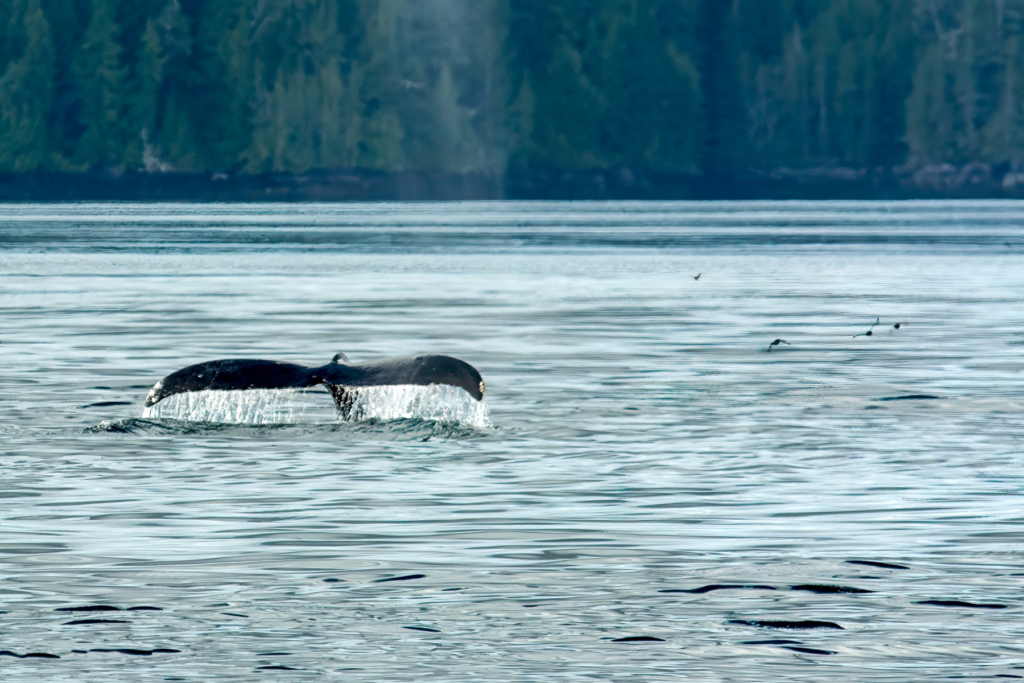
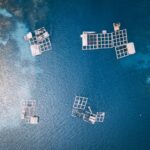
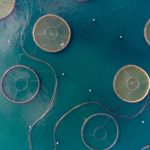
Researchers at UBC’s Institute for the Oceans and Fisheries conducted the first study of humpback whale entanglements in B.C. aquaculture facilities.
Mar 21, 2024
A study published today is the first to find polycyclic aromatic hydrocarbons (PAHs) in orcas off the coast of B.C., as well as in utero transfer of the chemicals from mother to fetus.
Dec 19, 2023
The four marine scientists will row across the Atlantic as part of the World’s Toughest Row – Atlantic 2023 from The Canary Islands to Antigua.
Dec 7, 2023
We spoke to four experts including current and former COP delegates to ask what the world, and Canada, needs to see come out of the conference.
Nov 28, 2023
That’s in a high carbon emissions and low mitigation scenario, according to the study published today in Nature Climate Change.
Oct 30, 2023
New research confirms that Tsleil-Waututh Nation has consistently and sustainably fished for chum salmon for 1,200 years longer than the archaeological record had previously demonstrated.
Aug 30, 2023
New UBC research found that seaweed have been misleading scientists about coral reef health, and scientists need new ways to determine whether human activity is harming a particular reef.
May 4, 2023
Clouds seem to offer some protection from excess heat to coral reefs – but most will still face frequent bleaching by 2080, according to new research.
Feb 8, 2023
Dr. Rashid Sumaila and Dr. Muhammed Oyinlola discuss why we can’t rely on just farmed seafood for our fishy needs.
Nov 14, 2022
Global fish stocks will not be able to recover to sustainable levels without strong actions to mitigate climate change, a new study has projected.
Sep 1, 2022
British Columbia’s ocean contributed almost $5 billion to provincial gross domestic product in 2015, a sum that is likely an underestimate, a new UBC study has found.
Aug 9, 2022
The endangered southern resident killer whale population isn’t getting enough to eat, and hasn’t been since 2018, a new UBC study has determined.
Jun 27, 2022
From some of the largest jellyfish in the world in Japan to the tiny venomous Irukandji in Australia, UBC doctoral student Jessica Schaub is about to set off on an international tour of jellyfish.
UBC experts are available to comment on various topics on June 8, World Oceans Day.
Jun 6, 2022
Scientists are calling on the World Trade Organization (WTO) to ban subsidies that can cause overfishing at its meeting next week.
Vancouver seafood lovers may see more Humboldt squid but less sockeye salmon on restaurant menus in the near future due to climate change.
Apr 21, 2022
Climate change will force 45 per cent of the fish stocks that cross through two or more exclusive economic zones to shift significantly from their historical habitats and migration paths by 2100, a challenge that may lead to international conflict, according to a new UBC study.
Jan 18, 2022
The supply of farmed seafood such as salmon and mussels are projected to drop 16 per cent globally by 2090 if no action is taken to mitigate climate change, according to a new UBC study.
Dec 13, 2021
Researchers have found the two-year heatwave known as ‘the Blob’ may have temporarily dampened the Pacific’s ‘biological pump,’ which shuttles carbon from the surface ocean to the deep sea where it can be stored for millennia.
Oct 28, 2021
A popular belief that there are fewer Chinook salmon during the summer in Canadian waters for southern resident killer whales, compared to an abundance of fish for northern resident killer whales, has been debunked by a study led by scientists at the University of British Columbia.
Oct 12, 2021
An information source that gives journalists access to UBC’s expertise.